
Why Accessible Design Is Good for Business
25 June, 2026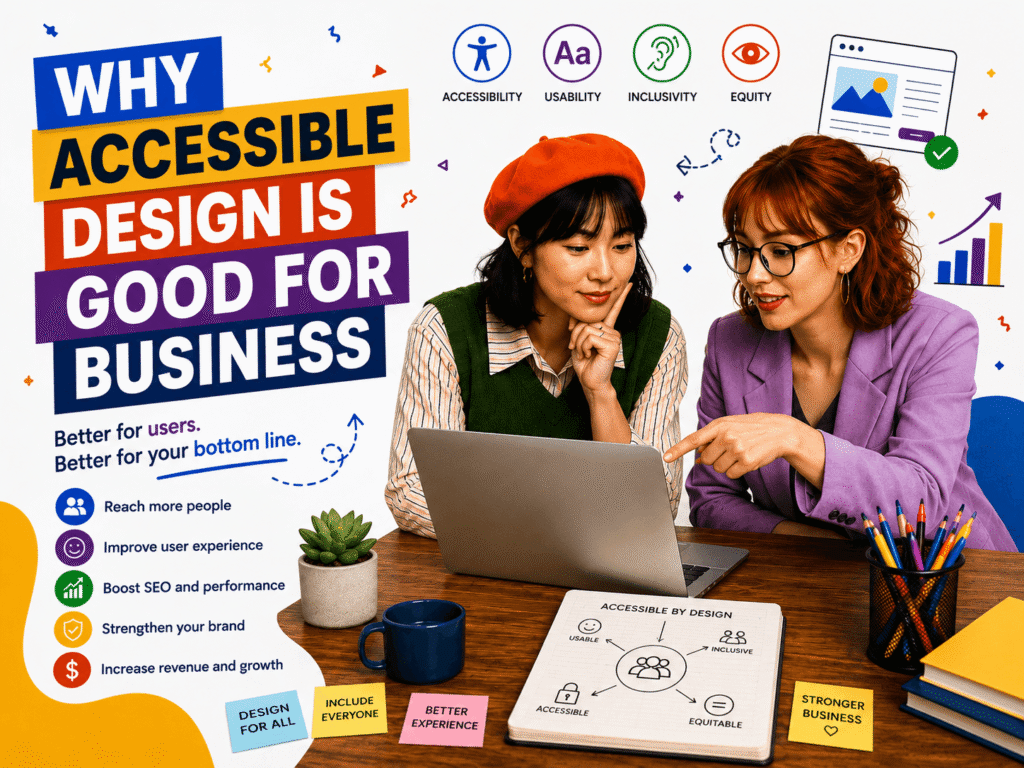
Table of Contents
Accessible web design isn’t just a compliance checkbox or kindness for a small group—it’s a smart, inclusive approach that benefits everyone. When people hear “accessible design,” they often picture a compliance checkbox something done to satisfy a rule, or a kindness extended to a small group of users. Both views miss the point. Accessible design means building websites and digital products that everyone can use, regardless of how they see, hear, move, or interact with technology. And far from being a niche concern, it’s one of the smartest, most overlooked business decisions a company can make.
Designing for accessibility widens your audience, improves your search visibility, strengthens your brand, and almost always produces a better experience for every user not just those with disabilities. In other words, doing the right thing and the profitable thing happen By focusing on accessible web design, your business fosters inclusion and can guide every visitor seamlessly to becoming a loyal customer. For further insights on implementing accessible web design best practices, we recommend visiting this accessibility chst.to bee.
Accessible web design helps businesses create websites that are easier to use, easier to understand, and more welcoming for every visitor.
What Accessible Design Actually Means
At its core, accessibility is about removing barriers. It means a person who can’t see well can still navigate your site with the text enlarged or read aloud. It means someone who can’t use a mouse can still get through your site with a keyboard. It means clear structure, readable text, sufficient contrast, and content that makes sense to everyone.
None of this requires a separate, stripped-down version of your website. Good accessibility is woven into thoughtful design from the start, and when it is done well, most users never notice it because everything simply works the way they expect.
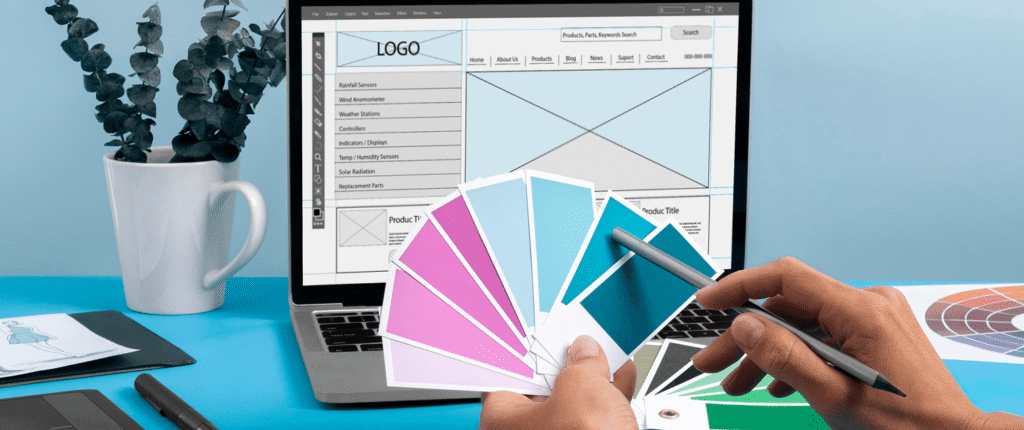
Good accessible web design starts with simple decisions like readable text, clear structure, meaningful labels, and navigation that works for everyone.
You can also review accessibility guidance from W3C Web Accessibility Initiative to understand the core principles of accessible websites.
You’re Excluding More Customers Than You Think
It’s easy to assume accessibility affects only a small slice of people. In reality, a significant share of the population lives with some form of disability visual, auditory, motor, or cognitive and that number grows as populations age. Every one of those people is a potential customer, and an inaccessible website turns them away before they’ve had a chance to engage.
It’s also broader than permanent disability. Think of someone reading your site in bright sunlight, browsing one-handed on a crowded bus, or trying to watch a video with the sound off. These everyday, situational limitations affect everyone at some point.
Designing for accessibility means designing for all of these moments which is to say, for real life.
Accessible Design Helps Everyone
One of the most underappreciated truths of accessible design is that improvements made for people with disabilities almost always make the experience better for everyone. Captions help people who are deaf and also anyone watching without sound. Strong color contrast helps people with low vision — and also anyone on a glaring screen outdoors. Clear structure and simple language help people with cognitive differences and also anyone in a hurry.
This is sometimes called the curb-cut effect: ramps built for wheelchairs end up helping parents with strollers, travelers with luggage, and delivery workers with carts. Accessible websites work the same way. Designing for the edges improves the experience right across the middle.
It’s Also Good for SEO and Performance
There’s a happy overlap between accessible design and the things search engines reward. Many of the practices that make a site accessible clear structure, descriptive text for images, logical headings, well-labelled links also help search engines understand and rank your content. A site built for accessibility is often a site that’s easier to find.
Accessible web design also supports search visibility because clear headings, descriptive content, and well-structured pages help both users and search engines.

Where to Start
The same goes for usability and speed. Accessible design tends to be clean, well-organized, and efficient, which benefits performance and conversions alike. Far from being a cost, accessibility frequently improves the very metrics businesses care about most.
You don’t have to overhaul everything at once. A few foundational practices deliver most of the benefit.
Contrast and text
Make sure text stands out clearly against its background and is large enough to read comfortably. Low-contrast, tiny text is one of the most common and easily fixed barriers.
Keyboard and structure
Ensure your site can be navigated without a mouse, and that headings and layout follow a clear, logical order. This helps assistive technology and ordinary users alike.
Descriptive content
Add meaningful descriptions to images, label your buttons and form fields clearly, and write in plain, direct language., and write in plain, direct language. These small habits make a large difference.
Accessible web design goes hand in hand with mobile first experiences and custom web solutions. To keep improving your site, explore our guide on mobile-first design to see why optimizing for smartphones is no longer optional, and learn whether a custom website or a template is the best fit for your business. For more guidance on accessible web design principles, visit the why need hosting.
Designing for Everyone Is Just Good Design
Accessible design isn’t a constraint that limits creativity or a box to tick at the end of a project. It’s a discipline that produces clearer, faster, more usable websites ones that welcome more people, rank better, and reflect a brand that genuinely cares about its customers. The businesses that embrace it don’t just do right by their audience; they reach more of it.
In a competitive market, that’s an edge worth having. A website that works for everyone is simply a better website and a smarter investment.
If you’d like to make your website work for every customer who visits it, Kudzu.ai designs accessible, human-centered digital experiences for businesses across Jordan and the region. Explore our design services, or reach out to talk through how your site could welcome more of the people you’re trying to reach.