
What is UX Design?
24 April, 2026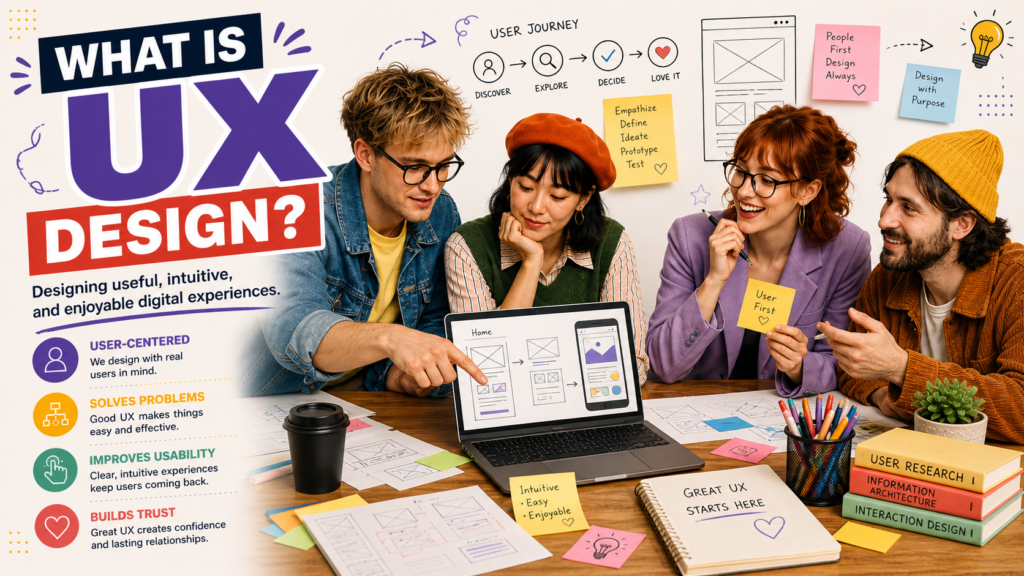
Table of Contents
What Is UX Design? A Simple UX Design Definition
UX design definition: User Experience (UX) design is the process of creating products, websites, apps, and services that are easy, useful, accessible, and enjoyable for people to use. It focuses on the full experience a user has from the first moment they interact with a product until they complete their goal.
A clear UX design definition helps businesses and design teams understand that user experience is not only about visual design. It is about creating a smooth journey that helps users complete their goals with less effort and more confidence.
UX is not only about how something looks. It is about how something works, how simple it feels, how clearly information is presented, and how smoothly users can move from one step to another. A good UX design helps users understand what to do, where to click, and how to complete an action without confusion or frustration.
For example, when you use an elevator, open a door handle, order food through an app, or book a service through a website, you are experiencing UX. If the steps are clear and the process feels simple, the experience is good. If the process is confusing, slow, or difficult, the user experience needs improvement.
User Experience Designer (UX)
A user experience designer is responsible for understanding users, identifying their needs, and designing solutions that make products easier and more valuable to use. The goal of UX design is to create products that are practical, useful, accessible, and enjoyable.
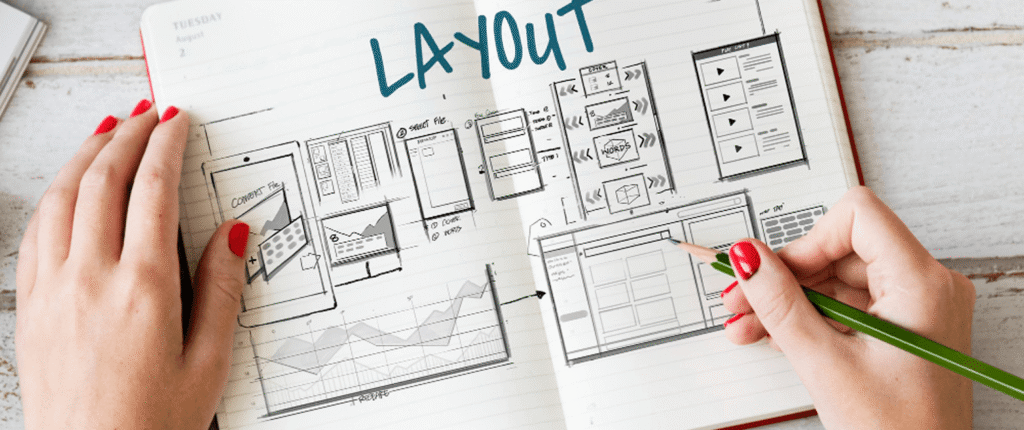
UX designers often work with research, user journeys, wireframes, prototypes, testing, content structure, and user feedback. They study how people interact with a product and look for ways to improve that interaction.
For example, a UX designer may review a checkout process on an e-commerce website. If users are leaving the page before completing their purchase, the designer may study the issue and suggest improvements. This could include reducing the number of steps, making buttons clearer, improving page speed, or simplifying the form fields.
This is why UX design is closely connected to business goals. A better user experience can increase trust, reduce mistakes, improve conversions, and make customers more likely to return.
This UX design definition is important because it shows the difference between creating something that only looks good and creating something that truly works well for users.
UX vs. UI Design
UX and UI design are connected, but they are not the same.
UI design, or User Interface design, focuses on the visual side of a product. It includes typography, colors, icons, buttons, spacing, animations, and navigation components. In simple terms, UI is how the product looks.
UX design focuses on the full experience users have with the product. It includes how users feel, how easy the product is to use, how clear the journey is, and whether users can complete their goals successfully. In simple terms, UX is how the product works and feels.
For example, a button’s color, shape, and size are part of UI design. But where the button is placed, what the button says, and whether users understand what happens after clicking it are part of UX design.
A beautiful interface can still have poor UX if users cannot understand it. At the same time, a simple interface can deliver strong UX if it helps users complete their tasks easily.
The Design Thinking Process
The design thinking process is a problem-solving approach that helps designers understand users before creating solutions. Instead of guessing what people need, designers look at the problem from the users’ point of view.
Design thinking is usually built on five main stages: empathize, define, ideate, prototype, and test.
Empathize
At this stage, you research your audience and learn about their needs, pains, expectations, frustrations, and behaviors. This can include interviews, surveys, observation, analytics, or feedback from real users.
The goal is to understand the user clearly before making design decisions.
Define
After collecting research, the next step is to define the main problem. This means turning user insights into a clear challenge your team can solve.
For example, instead of saying “the website is not working well,” a clearer problem would be: “Users are leaving the checkout page because the payment process feels too long and unclear.”
Ideate
At this stage, the team brainstorms possible solutions. The goal is to explore different ideas, even unusual ones, before choosing the strongest direction.
This stage encourages creativity and helps the team avoid jumping to the first solution too quickly.
Prototype
Once the team selects a few strong ideas, they create simple prototypes. A prototype can be a rough wireframe, a clickable screen, or a basic version of the product.
The purpose is to visualize the solution before spending time and money on full development.
Test
Testing helps validate assumptions and collect feedback from users. Instead of launching a final product without knowing if it works, designers test the prototype and improve it based on real user behavior.
This step helps reduce risk, save development time, and create a better final experience.
You can also learn more about user experience principles from Nielsen Norman Group, one of the well-known resources in UX research and usability.
Why UX Design Matters
UX design matters because users expect products to be simple, fast, and clear. When people face confusion, they often leave and choose another option. A strong user experience helps build trust, improve engagement, and support business growth.
A clear UX design definition helps teams understand that UX is not just a design trend. It is a practical approach to solving user problems and creating better digital experiences.
Whether you are building a website, mobile app, platform, or service, UX design helps make the experience easier for users and more effective for your business.
In simple terms, the best UX design definition connects user needs, business goals, and practical design decisions in one clear process.
Get your design from our UX expertise now!